

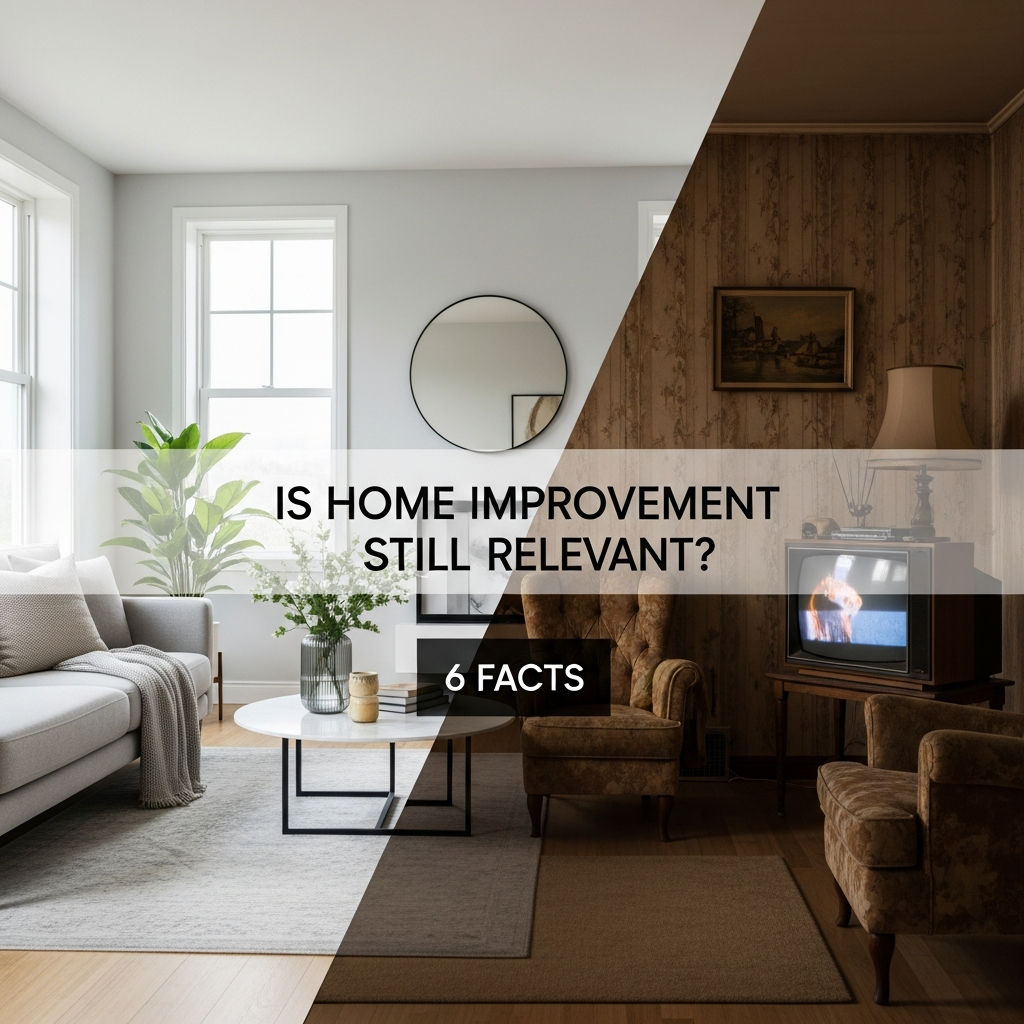
Is Home Improvement Still Relevant? 6 Facts That Prove It’s More Important Than Ever
In an era of fluctuating interest rates, shifting real estate markets, and a global emphasis on sustainability, many homeowners are asking a critical question: Is home improvement still relevant? A few years ago, during the height of the “stay-at-home” era, the answer was an easy yes. Today, with inflation impacting the cost of materials and labor, the decision to renovate requires a more strategic approach.
However, the data suggests that home improvement isn’t just relevant; it is evolving into a necessity for financial stability and personal well-being. Whether you are looking to sell in the near future or plan to stay in your “forever home,” the way we invest in our living spaces has lasting implications. Here are six facts that prove home improvement remains a vital part of modern homeownership.
1. The “Lock-In Effect” is Driving Major Renovations
One of the most significant factors making home improvement relevant today is the current state of the mortgage market. Millions of homeowners secured historically low interest rates (often between 2% and 4%) between 2020 and 2022. With current rates significantly higher, many people are experiencing the “lock-in effect.”
Instead of selling their homes and trading a low interest rate for a much higher one, homeowners are choosing to stay put. This has led to a surge in “lifestyle renovations.” If a family outgrows their space, they are more likely to finish a basement or add an extension than to move. When you can’t buy the house you want, you build the features you need into the house you have.
2. ROI Focus Has Shifted to Exterior and Functional Upgrades
In the past, “home improvement” often meant high-end granite countertops and luxury bathroom fixtures. While these are still popular, the relevance of home improvement in today’s market is tied more closely to Return on Investment (ROI) and “curb appeal” projects. According to the 2024 Cost vs. Value reports, functional upgrades often outperform aesthetic ones.
- Garage Door Replacement: Frequently yields over 100% ROI.
- Steel Entry Door Replacement: Enhances security and energy efficiency while recouping a high percentage of costs.
- Minor Kitchen Remodels: Refreshing cabinets and appliances often yields a better return than a full-scale, luxury gut-job.
Home improvement remains relevant because it acts as a safeguard for your largest financial asset. By maintaining the “envelope” of the home (roofing, siding, and windows), you prevent depreciation and ensure the property remains competitive in any market condition.
3. Energy Efficiency is Now a Financial Imperative
Sustainability is no longer just a buzzword; it is a primary driver of home improvement relevance. With utility costs rising globally, homeowners are looking for ways to “future-proof” their wallets. Modern home improvements are increasingly focused on reducing carbon footprints and monthly bills.
Investments in high-efficiency HVAC systems, heat pumps, spray-foam insulation, and solar panels are at an all-time high. Furthermore, many governments now offer tax credits and rebates (such as the Inflation Reduction Act in the United States) to incentivize these upgrades. This makes home improvement a proactive financial strategy rather than just an expense. A home that costs less to run is objectively more valuable and more relevant to the modern buyer.
4. The Rise of Multigenerational Living
Demographic shifts are changing how we view the layout of our homes. We are seeing a significant increase in multigenerational households—whether it’s adult children moving back home due to the cost of living or aging parents moving in to avoid the high costs of assisted living. This shift has made “Universal Design” and Accessory Dwelling Units (ADUs) incredibly relevant.
Home improvement projects now frequently include:
- Converting Garages into Studio Apartments: Providing independent living spaces for family members.
- Aging-in-Place Modifications: Installing walk-in tubs, wider doorways, and ramps.
- Dual Primary Suites: Designing homes with two main bedrooms to accommodate two generations under one roof.
By adapting a home to meet these needs, homeowners are providing a solution to a societal shift, ensuring the home remains functional for decades.
5. Smart Home Integration is No Longer Optional
Is home improvement still relevant if it doesn’t involve a hammer and nails? Absolutely. The digital transformation of the home is a major component of modern renovation. “Smart” home improvements have transitioned from luxury gadgets to expected standards.
Buyers today look for integrated security systems, smart thermostats, and EV (Electric Vehicle) charging stations in the garage. Updating a home’s electrical system to handle the load of modern technology is a critical improvement. These upgrades improve the “usability” of the home, making it more relevant to a tech-savvy generation of homebuyers who value convenience, connectivity, and remote management of their property.
6. The Psychology of Space and Mental Well-being
Since the shift toward remote and hybrid work, the home has become more than just a place to sleep—it is an office, a gym, and a sanctuary. The relevance of home improvement today is deeply tied to mental health and the “psychology of space.”
People are investing in “Biophilic Design,” which involves bringing the outdoors in through larger windows, indoor gardens, and natural materials. They are also prioritizing dedicated workspaces that are acoustically separated from the rest of the house. Improving your environment to reduce stress and increase productivity is perhaps the most relevant use of home improvement funds in the 21st century. If your home doesn’t serve your lifestyle, it isn’t serving its purpose.
Conclusion: The Verdict on Home Improvement
Is home improvement still relevant? The evidence points to a resounding yes. While the “why” has shifted from purely aesthetic desires to strategic financial and lifestyle choices, the “what” remains the same: investing in the place where you spend the majority of your life.
The relevance of home improvement in the current economy lies in its ability to provide:
- Financial Protection: Shielding against inflation and high interest rates.
- Efficiency: Lowering long-term operational costs.
- Adaptability: Meeting the needs of changing family structures and work habits.
As we move further into the decade, the most relevant home improvements will be those that balance immediate comfort with long-term sustainability and value. Whether you are painting a room to boost your mood or installing a new roof to protect your equity, every dollar spent wisely on your home is an investment in your future.