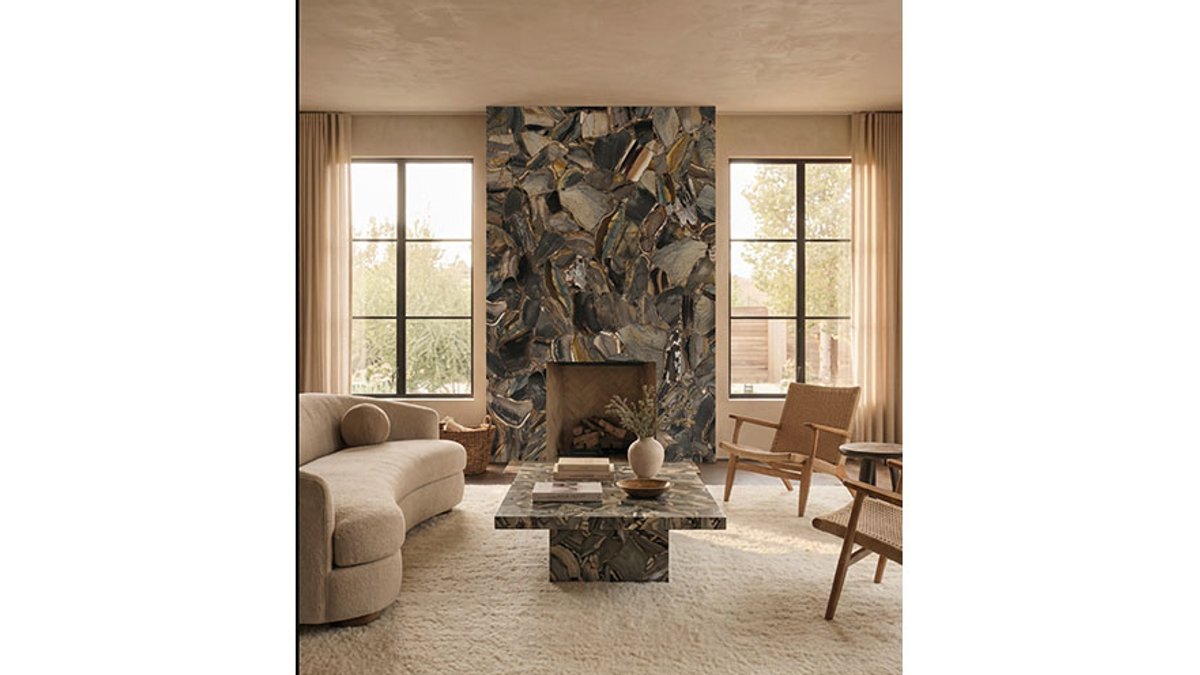
Home designers are swapping cool grays and high‑gloss finishes for warmer palettes, richer textures and more personal touches, with natural stone and quartz surfaces taking center stage in the shift. These choices respond to a growing desire for spaces that feel lived‑in rather than showroom‑like.
Warm palettes and tactile finishes reshape interiors
New color schemes favor earth tones and subtle veining that add visual weight without overwhelming a room. The trend emphasizes continuity, letting a single material thread link kitchen, bathroom and living areas. By using the same stone across zones, owners report a sense of flow that reduces visual clutter.
Manufacturers are expanding the range of finishes, offering honed, matte and leathered textures that feel less clinical than polished surfaces. The expanded catalog also includes brushed and sand‑finished options that hide fingerprints better than glossy surfaces. These options let homeowners create a cohesive look while preserving individual room character.
Expanding beyond kitchens: laundry rooms and mudrooms
Spaces once treated as purely utilitarian are now finished with the same material language as adjoining rooms. A quartz slab placed over front‑loading washers and dryers creates a standing work surface, turning folding into a more ergonomic task. The slab can also serve as a backsplash, protecting walls from splashes.
Because laundry areas face detergent, bleach and constant moisture, durability is essential. Quartz does not require sealing and resists staining, while sealed granite offers comparable toughness. Both materials can be sealed on site to match existing countertops, creating a seamless transition.
Homeowners appreciate the added countertop for its practicality and the way it blends with the rest of the house, eliminating the visual break that older designs often displayed. Such integration often raises resale value because buyers notice the consistent aesthetic.
Texture matters more than ever.
Looking ahead, the broader adoption of these surfaces may encourage more owners to treat service zones as design opportunities rather than afterthoughts, though the cost of large slabs could temper rapid uptake.
Statement pieces in powder rooms and home bars
Powder rooms have become canvases for bold color and texture. Designers often choose a single dramatic surface—such as a deep‑green veined marble slab or a saturated blue‑green granite—to anchor the space. Accent lighting beneath the slab highlights the veining during evening gatherings.
Other options include graphic black soapstone with light veining or pale porcelain infused with vivid violet accents. These materials deliver impact while remaining functional for high‑traffic guest areas.
In home bars, a full‑height stone back panel or a waterfall‑edge countertop serves as a focal point. Quartzite provides marble‑like movement with the hardness to resist scratches from glassware, while engineered quartz offers a non‑porous, low‑maintenance alternative.
Outdoor living and fireplace design
Patios, pool surrounds and outdoor kitchens are adopting warm, sun‑washed tones that echo indoor palettes. Porcelain tiles absorb minimal water and hold color well, making them suitable for exposed environments. They also resist fading from UV exposure, keeping colors bright for years.
Resin‑free granite and quartzite are also popular for their durability and natural variation. Extending the same slab from an interior island onto a covered patio helps erase the line between inside and out.
Fireplace facades are moving toward tactile finishes. Honed marble, limestone, travertine and soapstone are being used in extra‑large, floor‑to‑ceiling slabs, often with fluted or leathered detailing that adds depth without relying on high polish. These choices combine aesthetic presence with the heat‑resistance needed for a functional hearth, allowing the feature to remain a visual anchor over time.
The overall pattern shows natural stone and engineered surfaces stepping beyond traditional kitchen and bath roles. By linking rooms, adding texture and delivering durability, they help create homes that feel both comforting and cohesive.


