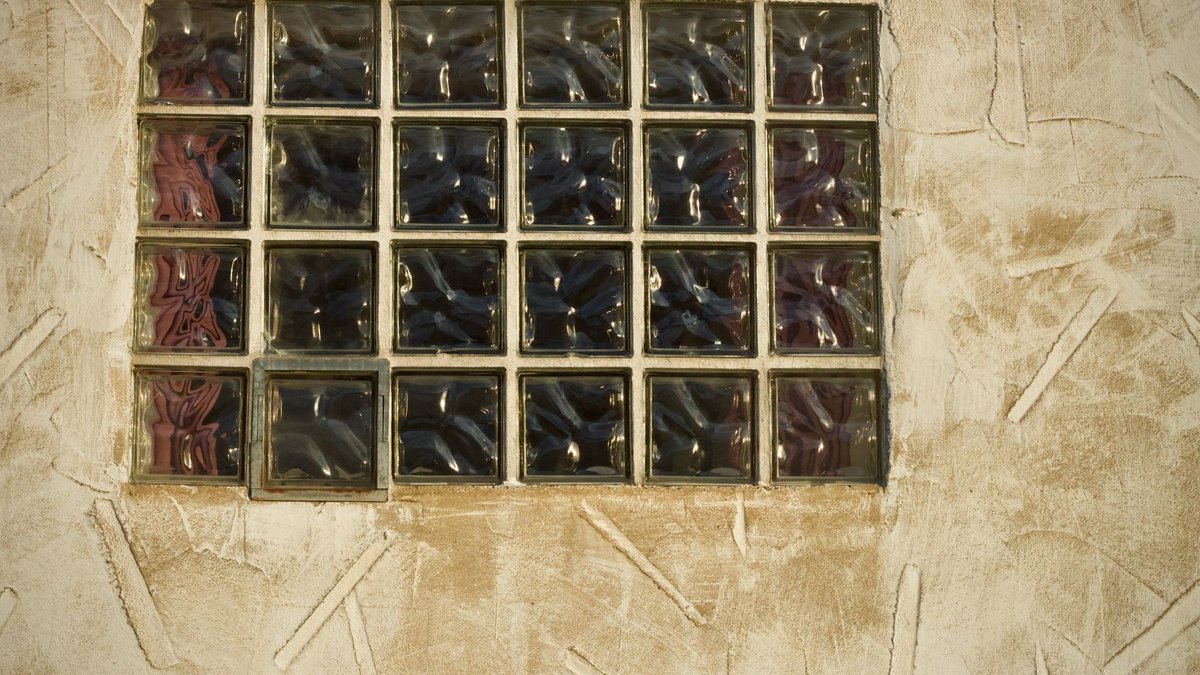
The IDS Vancouver and Design Vancouver Festival highlighted 12 projects that merge sustainability, technology, and cultural storytelling, showcasing West Coast creativity. Two studios demonstrated innovative approaches to materials, while designers integrated ecological principles into their craft. Glass block has re-emerged with a vengeance in recent years, long after its heyday in the PoMo 70s and 90s, to become trendy again in interiors and architecture. This revival shows a broader shift toward materials that balance historical nostalgia with modern functionality.
Glass Block Reborn
Bright Block Studio’s Jeff Ballard and Joe Tsoulfas transformed discarded glass bricks into illuminated fixtures. The Eugene-based team began this work in 2019 and launched commercially in 2023. Their Illuminate display revealed a process where bricks are gently heated and reshaped into diffusers, preserving their original textures while housing bulbs. This method avoids melting or crushing, using metal pipes instead to reform the blocks. The approach diverts waste from landfills while creating lighting solutions that retain their industrial character. The technique produces fixtures that evoke the bricks’ past lives, merging functionality with historical resonance.
The studio’s commitment to material longevity extends beyond aesthetics; their design philosophy prioritizes minimal intervention, ensuring that each fixture carries the imprints of its former existence. By avoiding destructive processes, Bright Block Studio’s work not only reduces environmental harm but also celebrates the material’s inherent beauty, making each piece a sign of adaptive reuse.
Related Post: Urquiola redefines office design with cozy, flexible furniture
Prototype’s Sustainable Furniture
Founded by MJ Mayo, Ian Backstrom, and Drake Dong in Squamish, B.C., Prototype exhibited furniture made from recycled PETG and bio-polymer oak. Their Juniper side table and floor lamp incorporate locally sourced materials, blending technology with warmth in their design. The pieces use 3D printing to achieve organic forms that mimic natural light diffusion. The designers describe Juniper as capturing light like “sunlight through morning fog,” producing a rhythmic amber glow. This effect transforms the space from within, demonstrating how advanced manufacturing can achieve emotional depth.
Household Innovations with Eco-Benefits
RISD student Jason Xu introduced Spent, a coffee machine that converts used grounds into biochar through pyrolysis. The device, styled like a Mercedes-Benz SL65 AMG Black Series, reduces landfill methane emissions while generating renewable energy. Its sleek design positions it as both a functional appliance and a statement piece. Brian Patterson’s BioFilix system responds to plant soil moisture using sensors, causing a wooden sculpture to curl when thirsty. Inspired by fiddleheads and Fibonacci patterns, the installation turns plant care into an interactive, visually engaging experience.
Indigenous Design and Cultural Revival
Coast Salish artist James Nexw’Kalus-Xwalacktun Harry presented Ancient Futures Prototype, a pavilion design rooted in Indigenous geometric forms. The structure combines wood and concrete, integrating crescents, circles, and trigons into a cohesive gathering space. Harry’s work reflects a fusion of cultural heritage with contemporary architecture through parametric design techniques. His previous project, the Welcome Gate at Sp’akw’us Feather Park, further demonstrates this approach. The pavilion design continues this tradition, ensuring that traditional aesthetics inform modern structural solutions.
Related Post: Urban design shifts toward sustainability and community in global cities
Upcycled Materials in Functional Art
Maya River creates vessels from upcycled paper pulp, inspired by natural shapes and historical artifacts. Pieces like Bastion, Seedkeeper, and Protector serve as both vases and decorative objects, combining tactile simplicity with artistic expression. The materials allow for smooth, organic forms that feel both modern and timeless. Brent Comber and Chinchilla Design’s Singing Hollow sculpture, made from cedar and yellow cedar, invites interaction by amplifying ambient sounds when visitors place their faces near its hollow core. The design transforms passive observation into a meditative experience.
International Craftsmanship and Local Traditions
McKinley Studios’ Homies show featured Marrimor’s Bloop Area Rug and Concerto Console Table, which blend hand-tufted wool with brushed brass and ceramic elements. The duo behind the project, Tanja Breadner and Lauren Bugliarisi, have exhibited internationally, including at Alcova Milano. Their work balances global influences with regional craftsmanship. Hinterland’s Shepherd’s Chair, inspired by herding traditions, offers heirloom-quality construction in bent white ash or black walnut, finished with vegetable-tanned leather. The design reflects both practical utility and the natural surroundings of the Pacific Northwest.
Modular and Biological-Inspired Design
Tyler Goin’s Shadow Brick Console, part of OBJ OBJ’s group exhibition, uses modular conical blocks that can be stacked in varied configurations. Paired with a Japanese bamboo vessel, the piece explores connections between different design eras. The modular system allows for customizable arrangements while maintaining structural integrity. Janaki Larsen’s Cluster in Grey draws from biological forms, merging ceramic techniques with ecological themes. The sculpture’s organic shapes highlight sustainability as both material and concept. Caine Heintzman’s THING 003, also in the OBJ OBJ show, repurposes industrial materials into sculptural cylinders, redefining functional aesthetics.


