Los Angeles is in the midst of a major museum renaissance, with the recent opening of the David Geffen Galleries at the Los Angeles County Museum of Art (LACMA) and the upcoming unveiling of the Lucas Museum of Narrative Art. The David Geffen Galleries, designed by Peter Zumthor with SOM, feature a raised concrete deck for viewing art and the city, with a winding, choose-your-own-adventure layout.
The museum’s permanent collection is displayed on a single columnless level, raised nearly nine meters to palm-tree height and supported by 10 concrete cores. The building’s design is meant to evoke a sense of timelessness, with raw, richly textured concrete surfaces that shift how visitors interpret the works on display.
LACMA director Michael Govan says the use of concrete is intentional, as it allows for a wide range of art to be displayed without the “art-world loftiness” of traditional white gallery spaces. The building’s design also incorporates natural light and city views, with brass-framed windows offering floor-to-ceiling views of the surrounding area.
Lucas Museum Unveiled
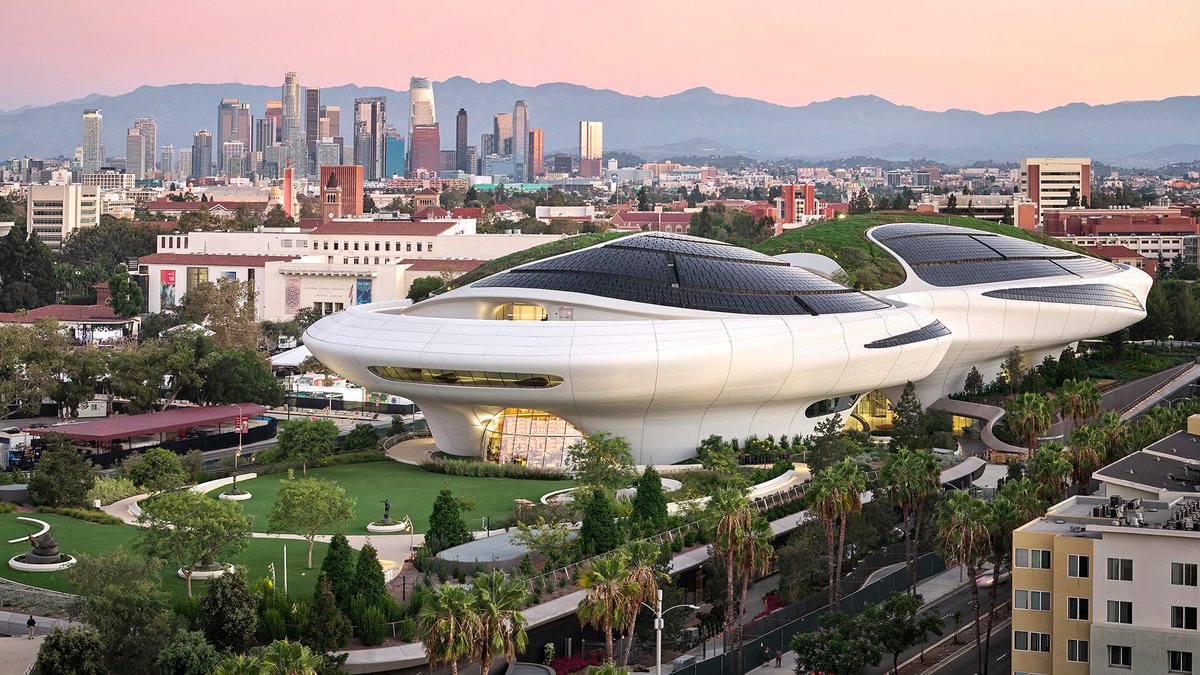
The Lucas Museum of Narrative Art, on the other hand, is a brand new cultural institution that will significantly impact the city’s museum scene. The museum, designed by MAD and Stantec, features an amorphous, five-storey amalgamation of stacked, curvilinear planes that is meant to evoke a sense of otherworldliness.
The museum’s collection includes a wide range of art and sci-fi ephemera, from Frida Kahlo self-portraits to C-3PO concept art. The museum’s chief of staff, Hillary Bliss, says the collection is meant to showcase “unsung artists” who create “the people’s art,” such as comics and children’s book illustrations.
The Lucas Museum is located across the road from the Los Angeles Memorial Coliseum and features a central plaza that will serve as a community hub. The museum’s design is also meant to be sustainable, with geothermal and rainwater harvesting systems, as well as photovoltaics that resemble pseudo-reptilian scales.
Related Post: Workplace Design Helps Improve Brain Focus and Memory
City Prepares for Olympics
Both the David Geffen Galleries and the Lucas Museum are part of a larger effort to revitalize Los Angeles’s cultural scene, with a number of other museums and cultural institutions undergoing renovations and expansions in preparation for the 2028 Olympics. The city‘s new D Line subway extension, which opened this spring, has also made it easier for visitors to access many of the city’s museums, including LACMA and the Lucas Museum.
The D Line features a number of public art installations, including a mural by Soo Kim at the Wilshire/La Cienega station and a mix of photos and pencil drawings by Karl Haendel at the Wilshire/Fairfax station. The line is part of a larger effort to make Los Angeles’s transit system more robust and user-friendly, with a number of other infrastructure projects underway in preparation for the Olympics.
As the city prepares for the 2028 Olympics, it’s clear that the David Geffen Galleries and the Lucas Museum will play a major role in showcasing Los Angeles’s cultural scene to the world. With their innovative designs and world-class collections, these two museums are sure to be a major draw for visitors from around the globe.
Museums Redefine Storytelling
The David Geffen Galleries’ design, in particular, is meant to evoke a sense of wonder and curiosity, with a winding layout that encourages visitors to explore and discover new things. The museum’s collection is displayed in a way that is meant to be intuitive and easy to follow, with thematic groupings and a focus on storytelling.
The museum’s collection is displayed in a series of galleries that are designed to be flexible and adaptable, with a focus on storytelling and narrative. The galleries are filled with a wide range of art and sci-fi ephemera, from classic comic book illustrations to rare and valuable artifacts from the Star Wars universe.
The Lucas Museum is a notable example of architecture’s ability to shape our experience of a city and its cultural institutions. The museum’s design is a masterclass in futuristic architecture, with a focus on sustainability, community engagement, and storytelling. As the museum prepares to open its doors to the public, it’s clear that it will be a major player in Los Angeles’s cultural scene for years to come, with its first exhibition set to open on September 22.


