Three Belgian cities — Bruges, Ghent, and Charleroi — are reshaping their cultural identities through innovative architectural projects. These initiatives merge modern design with historical contexts, enriching the urban environment.
A Modern Addition to Medieval Bruges
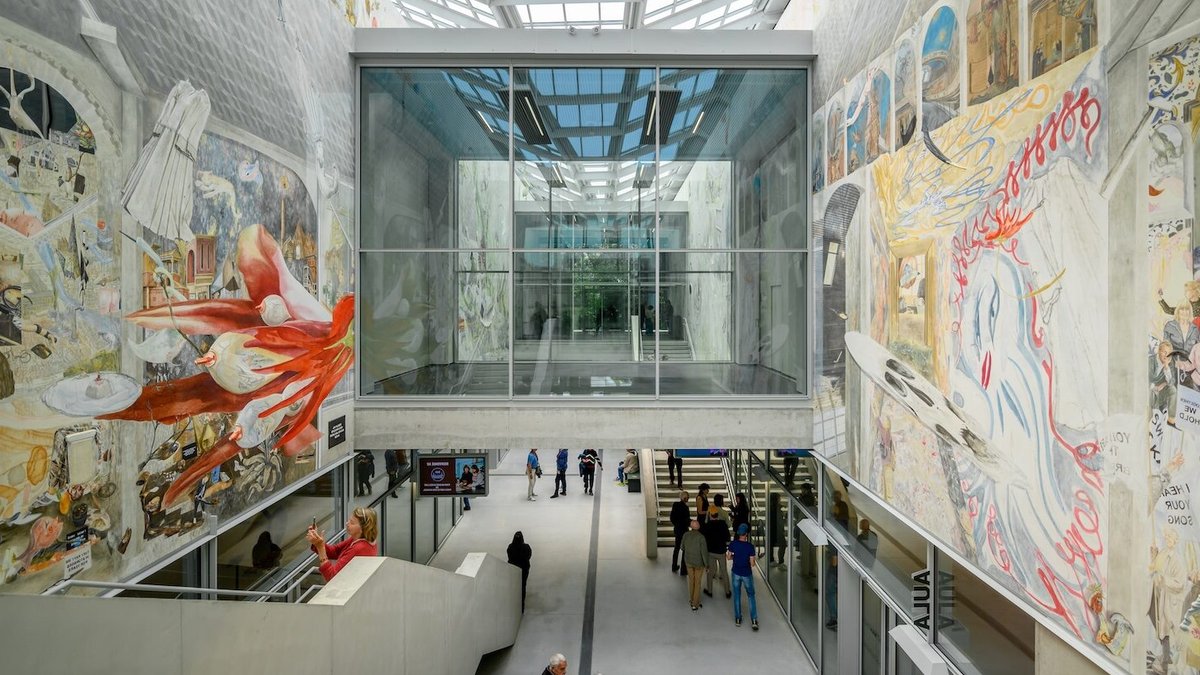
In the heart of Bruges, a UNESCO World Heritage Site, the BRUSK exhibition hall stands as a rare contemporary structure. Designed by Robbrecht en Daem Architecten and Olivier Salens Architecten, the 9,500-square-metre building features a concrete and glass design with a gabled roof and oversized dormer windows. Its most striking feature is the dark green glass roof embedded with photovoltaic cells, complementing the building’s energy-efficient systems, including a borehole thermal energy storage field. South-facing openings in its gentle slope allow indirect light into the two 14-metre-high exhibition halls, tempering the “colder light” from the larger north-facing windows, explains architect Paul Robbrecht.
Inside, the Scala Grande, a central street adorned with a monumental fresco by Laure Prouvost, guides visitors through the space. The fresco intricately depicts Bruges’s history and explores themes like ecology and globalization. Adjacent to BRUSK, a 1930s school building has been transformed into BRON, a scientific research centre, alongside a landscaped public piazza. PHOTOS: Jan Darthet
Revitalizing Ghent’s Design Legacy
Design Museum Gent, Belgium’s largest design museum, has reopened after a seven-year renovation. The project included a new five-storey wing designed by Carmody Groarke and ATAMA, connecting the museum’s historic buildings and upgrading its facilities. The wing features a white brick facade made from local mineral construction waste, reducing its embodied carbon by about two-thirds. PHOTOS: Michiel de Cleene
The museum now includes a rooftop terrace, enhancing visitor experience. A 3D-printed aluminum curtain by Unfold serves as a modern entrance. The reopening coincides with Design Fest Gent, featuring exhibitions like “Public Matter(s): Design and Democracy” and participatory programs Connect and Co-Lab.
Charleroi’s Industrial Transformation
The Palais des Expositions in Charleroi, originally built in the 1950s, has undergone a transformative renovation led by AgwA and Architecten Jan de Vylder Inge Vinck. Instead of demolishing the central portion, they opened it up, creating three levels of urban terraces that connect the building’s wings. This design turned the central foyer into a zero-energy space.
The architects also connected the ground floor to the second level, shifting the building’s organization from horizontal to vertical. The north wing now houses exhibition halls, while the south wing serves as a multi-storey car park and event space.
Every intervention respected the existing structure, balancing economy, ecology, and aesthetics. This approach is likened to architectural archaeology.
Charleroi’s Modern Attractions and Future Plans
Charleroi, known for its industrial past, features modern attractions like the DeHeug building and Jean Nouvel’s police headquarters. The city is transforming a former industrial park into a green space network.
The Nature in the City project, led by Michel Desvigne Paysagiste, aims to create pedestrian- and bike-friendly areas with new tree groves, establishing the Dampremy Quartier Nature.
This initiative is part of Charleroi’s broader efforts to blend its industrial heritage with sustainable, modern developments, ensuring a greener future for the city. The Scala Grande in BRUSK leads visitors to an all-day café and restaurant, and by 2031, it will connect to a major new public park. After exploring BRUSK’s exhibitions, such as “High Tide” opening October 30, visitors can continue their cultural journey at the Groeningemuseum. During its renovation starting March 2027, many of its masterpieces will be relocated to BRUSK. Additionally, Winter Glow brings two Christmas markets to Markt and Simon Stevinplein from November 20. For a peaceful retreat, visit Katelijne Park, inaugurated in 2024.
Ghent’s Design Museum, housed in buildings from the 16th to 20th centuries, reopened after a seven-year renovation. Its new wing, designed by Carmody Groarke and ATAMA, completes the courtyard and upgrades the museum to 21st-century standards. The museum now includes a rooftop terrace. Its reopening aligns with Design Fest Gent from October 3 to 11, featuring exhibitions and participatory programs.


