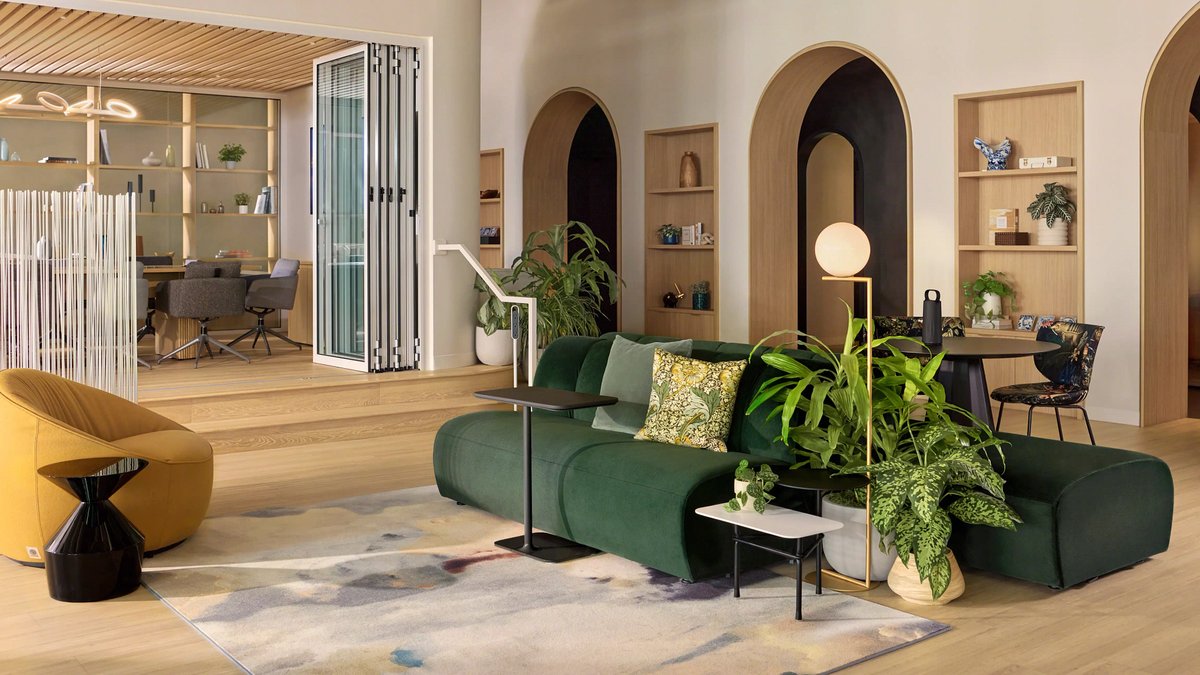
Workplace design influences cognitive performance by shaping how the brain processes information and manages stress. Steelcase research highlights that treating the brain like software that runs on autopilot fails to account for its biological needs. Environmental factors such as noise and visual distractions deplete mental resources, making it harder to maintain focus and think clearly. “Cognitive ergonomics” aims to reduce this strain by creating spaces that empower people to conserve mental energy for meaningful tasks.
Visual Privacy for Better Focus
Modern workplaces pose significant challenges to maintaining attention, as employees are constantly bombarded with conversations, movement, and visual stimuli that compete for their focus and increase mental fatigue. Research by Steelcase and the Center for Healthy Minds at the University of Wisconsin-Madison revealed that having some visual privacy can greatly improve one’s ability to sustain attention. In fact, participants who worked in semi-shielded areas performed better on tasks requiring concentration than those in fully open environments, even when the noise level was the same.
Organizations can help people protect their attention by incorporating privacy screens, shielding elements and enclosed focus areas. These features allow workers to minimize distractions and maintain a steady workflow without constant interruption.
Opportunities for Cognitive Offloading
The human brain has limitations when it comes to processing information, and it performs better when ideas are externalized and made visible. Tools like whiteboards, pin-up surfaces, and collaborative workspaces facilitate this process, known as cognitive offloading, by allowing teams to capture, organize, and revisit information, thereby reducing the strain on working memory and freeing up capacity for analysis, creativity, and problem-solving.
Physical environments also provide advantages that digital tools often cannot. By displaying multiple ideas simultaneously, teams can more easily identify patterns, connections and opportunities. This visual approach to collaboration helps groups process complex information more efficiently than staring at a single screen.
Support the Brain Through Movement
Movement plays an important role in cognitive performance, yet it is often overlooked in workplace design. Studies have shown that physical activity supports attention, memory and decision-making. Spaces that encourage people to switch between sitting, standing, perching or moving throughout the day can help maintain energy levels and engagement.
Spaces for Connection and Recovery
Innovation relies on connection and collaboration as much as it does on focus. Social spaces, such as cafés and community hubs, provide opportunities for spontaneous interactions, knowledge sharing, and relationship building, all of which help support trust, collaboration, and psychological safety – essential ingredients for innovation.


