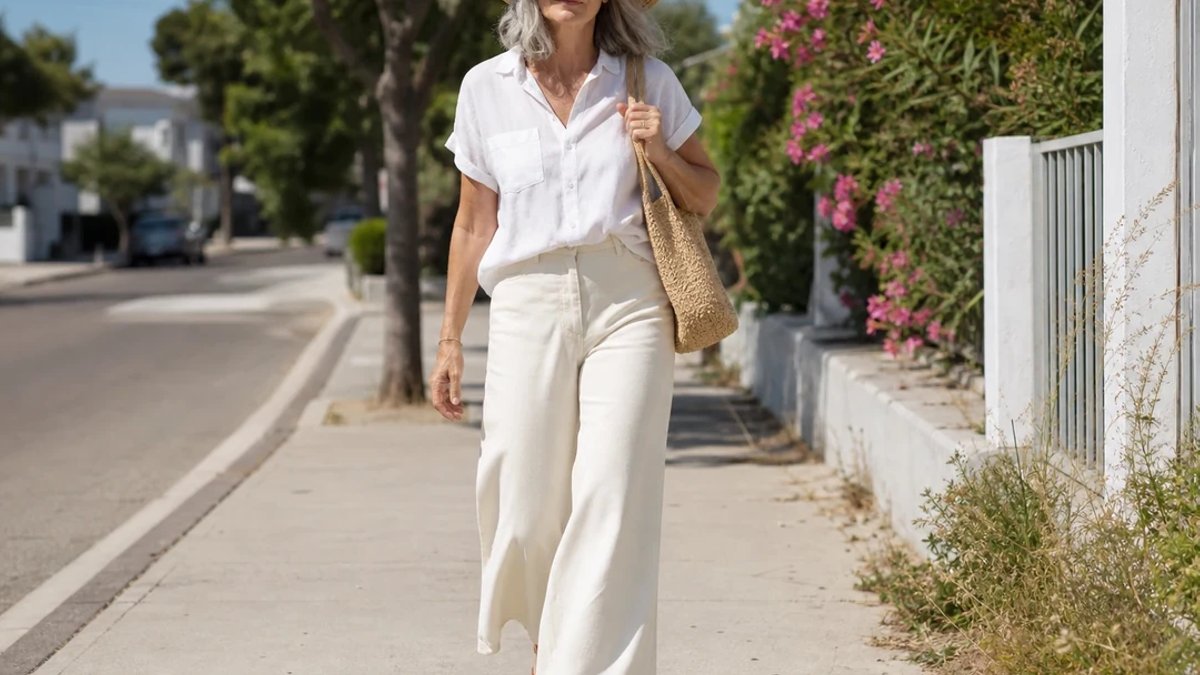
Denim isn’t the first choice for hot weather, but it’s a staple in many women’s closets, especially those over 50. When temperatures rise, comfort and safety become key factors in choosing the right pair of jeans.
Fabric Weight and Elastane: The Unseen Comfort Factors
The comfort of jeans in hot weather depends more on fabric weight and elastane percentage than the style or cut. A lightweight jean with a low elastane content allows for better airflow and moisture management, making it ideal for outdoor activities.
Fabric weight, measured in ounces per square yard, is a critical factor. Lighter fabrics, typically under 12 oz/yd², allow for better airflow and moisture evaporation. Heavier fabrics, on the other hand, can trap heat and moisture, making them less comfortable in hot weather.
Lyocell-Cotton Blends: The Cool Choice
Lyocell-cotton blends are a popular choice for hot weather jeans. Lyocell, often branded as Tencel, is a fiber that wicks moisture away from the skin, keeping the wearer cool and dry. A wide-leg jean made from an 8-10 oz lyocell-cotton blend is an excellent option for outdoor activities, as it allows for airflow and moisture management.
It recovers from sweat quickly, unlike 100% cotton jeans, which can feel clammy and hold moisture.
Related Post: Tailored ping pong table wows at Chelsea Show
For those in dry heat areas like Phoenix or Las Vegas, a moisture-moving fiber like lyocell is particularly beneficial. However, in humid climates, the cut and airflow of the jean become more critical factors.
Its wide cut allows for airflow, while the lyocell blend wicks moisture away from the skin. A pale wash further reduces heat absorption, making it a comfortable option for outdoor activities.
This style is widely available, with options ranging from $30-$60 at stores like Old Navy and Target, to $80-$150 at Madewell and Lands’ End. However, it’s essential to consider the hem length and blend quality to avoid issues like sagging or catching on objects.
A straight-leg rigid cotton jean, weighing 11-12.5 oz, is another option for hot weather. Its rigid fabric allows for airflow, making it comfortable for short outdoor stints. However, it can become clammy after prolonged exposure to heat and moisture.
The Role of Elastane and Fabric Weight in Jean Comfort
Elastane, a synthetic filament, wraps around cotton yarn, reducing airflow and increasing skin contact. Even a small amount, like 2%, can lead to discomfort by trapping heat and moisture.
Read Also: Scandinavian Moss Gift Boxes DIY
Cropped Straight Jeans: Venting Heat and Accommodating Swelling
Cropped straight jeans offer immediate heat relief by ending the hem at or just above the ankle bone, creating a vent for warm air to escape. This design prevents heat from pooling in the cuff, providing instant comfort without relying on fabric physics. Additionally, this cut accommodates heat-related swelling in the feet, ankles, and lower legs, a common issue for older adults flagged in federal heat guidance. The hem sits away from the ankle, ensuring comfort as the foot changes size throughout the day, unlike narrow tapered cuffs that can become tight by late afternoon.
However, many cropped fits are slim through the thigh, which can reintroduce skin contact and chafing above the knee. It’s essential to check the thigh fit, not just the hem, when selecting this style. Wearing sunscreen on the exposed lower leg is also recommended. While cropped straight jeans provide immediate relief, they are best paired with a smooth, snug base layer to prevent chafing in high-friction zones.
For those spending most of their day indoors with short outdoor walks, rigid straight-leg cotton jeans in light indigo are a better-looking alternative. This option avoids the damp waistband issue associated with heavier fabrics. Conversely, skinny stretch jeans and heavy dark rigid denim above 13 oz are less suitable for hot weather, as they trap heat and moisture, leading to discomfort and irritation.
Lyocell-cotton blends are superior in hot weather due to their moisture-wicking properties.
Cut and Airflow: Essential in Humid Climates
The relaxed barrel cut in heavy dark denim, while generous, can be counterproductive in hot weather. The dense fabric traps heat and moisture, making it uncomfortable after just 20-30 minutes in direct sun.


