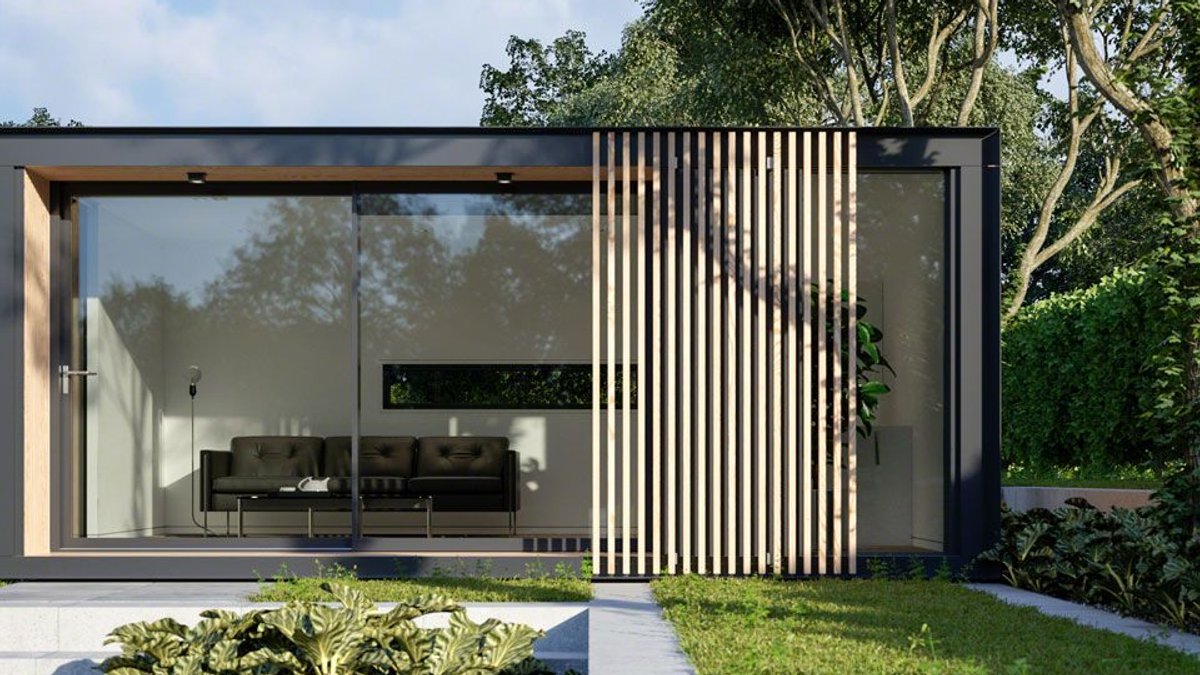
A garden room can be a great space for relaxation, work or entertainment, but not without the internet.
Internet access is no longer a luxury, but a necessity, even in relaxing spaces. It helps users stay connected, listen to music, or enjoy movies and other entertainment. For a home office in the garden, broadband coverage is essential to stay connected.
Standard broadband routers have relatively weak signals to prevent competition between routers in urban areas. Their transmissions aren’t powerful enough to persist across long distances or pass through obstacles like walls, floors, and furniture.
Wi-Fi signals become exponentially weaker with distance, and each frequency band has its drawbacks. The 2.4 GHz range overlaps with microwave oven frequencies, which can disrupt nearby devices. The 5 GHz range is immune to microwave interference but is more affected by obstacles and less likely to penetrate far-reaching areas.
Related: Can Air Conditioning Be Green?
There are several options to improve wireless networks, including buying a Wi-Fi booster or range extender. A range extender connects wirelessly to the existing router and repeats its signal, while a booster has a wired connection to the router and creates a second wireless network.
Range extenders don’t always work well, as they depend on a wireless connection to the router. Boosters generally provide faster and more stable results, but they require a wired connection, which can be challenging in homes without category five network wiring.
Powerline boosters are an alternative, using the building’s mains wiring to exchange data and offer a stable connection in areas that previously didn’t have one. Mesh Wi-Fi systems, which consist of two or more units working together, can also provide seamless, high-bandwidth coverage throughout the home.
Covering a garden with Wi-Fi is more complicated, as standard networking products are designed for indoor use.
Related: Colourful Queenslander a timeless family home
Running network cabling from the router to a suitable point outside can also provide a stable connection. This can be done using Power over Ethernet (PoE) devices, which provide a small amount of power alongside the data signals and avoid the risks associated with using mains-powered devices outdoors.
In such cases, a Powerline adaptor might be the next best option, but it’s not guaranteed to work due to wiring quality and separate power circuits. Mobile broadband are alternative options, although they have their own limitations and costs.
Mobile broadband, also known as MiFi, can provide a decent connection, especially in 5G areas. However, it may have ongoing costs, and devices in the garden room wouldn’t be on the same network as those in the home, which could pose a problem for local network traffic.
Ultimately, the choice of solution depends on the specific situation and needs, and it’s essential to weigh the costs and benefits of each option carefully.


