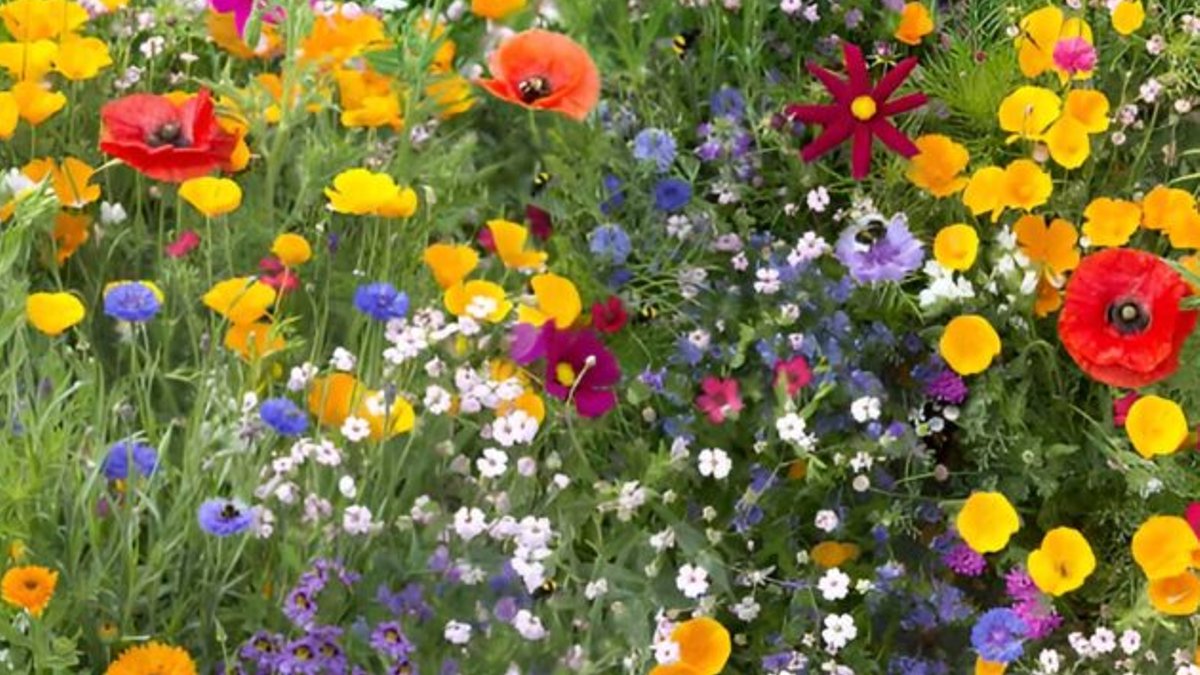
Going grassless has its perks, so ditch the mower and look at these lawn-free garden ideas to bring sustainability, biodiversity and creativity to your outdoor space.
A lush square of regularly mown grass was once the marker of a well-kept garden. However, times have changed and with movements like no-mow May set up by Plantlife, lawn-free gardens are seeing an uptick in popularity.
Without a lawn, there is greater scope for creating diverse habitats for important pollinators. Diverse planting can also help improve soil structure and health, especially if you are opting for a no-dig garden.
Deeper-rooted plants and trees have higher levels of carbon sequestration than grass. The higher the level of sequestration, the lower the amount of carbon released into the atmosphere.
Coastal plants thrive in shingle. The unique topography of Dungeness has been designated as a National Nature Reserve and is home to over 600 species of plants. Derek harnessed this natural setting to create his seminal garden at Prospect Cottage in East Sussex.
Related: Slim doors vary in quality and design
Describing Derek’s garden, Kendra Wilson says, “Cotton lavender, Californian poppy and salvia would be inclined to flop in a well-tended border, but in shingle they’re stronger and tighter.”
Many gardens in the local area, like Camber Holiday Cottages’ Chandler’s Cabin on the outskirts of Rye, utilise shingle in their gardens to great effect. When it comes to planting, perennials like sea kale and sea holly which tolerate salty, windy conditions work well, as does aromatic lavender and drought-tolerant sedum and euphorbia. Beth Chatto’s gravel garden in Essex is another excellent source of inspiration for the beauty and diversity that can be developed with drought-tolerant plants in a shingle garden; it is famed for never being watered.
That’s where a rain garden can really help. Essentially, a rain garden collects, absorbs and filters rainwater and stormwater mainly from impervious surfaces so it can be slowly released back into the ground, helping control soil erosion.
Walkways lined with full borders are a way of being able to stroll your garden and enjoy the flowers. You can make your pathways as modern or as rustic as you like. Zig-zagging paths through your planting can soften the edges of the pavers and let nature and man-made mix. Another more eco-friendly option is to leave spaces between pavers for more of a stepping stone look, to let the plants grow up through.
Decking is a versatile choice for hard landscaping and is a low-maintenance option for a lawn-free garden. Decks can level out sloped areas and turn your outdoor areas into a useable room. There are two main types of decking to choose from, timber, which you will need to check is FSC certified, or composite.
Good quality composite decking is made of recycled wood and plastic and tends to be more durable and low-maintenance. Consider using levels in your decking as a way of zoning your garden and creating different areas. Decking can work especially well with borders of soft grasses around a hot tub, swimming pool or pond and create the ideal space to sit out on in the evenings.
Related: Barista Quality Coffee at Home Now Possible
Widening your borders will allow you to bring a lot more greenery and texture through planting. Wide borders work especially well with informal gardens that can be left wild and free. Soto Gardens offers a range of full borders that you can order as a whole border. Its wide options are around 1.5 metres from front to back.
If you are putting your own border together, think about what soil type you have, what amount of sun or shade it gets throughout the day, and how exposed it is to the elements. Do you live in a walled garden, or do you have open expanses? Think about how wide you would like it, will it be a deep curved border running the length of the garden for example?
The Royal Horticultural Society says whatever the size, you will need to calculate its area. Use a long tape measure on a reel or pace out the measurements to find out the length and width of your border and then work out the area. Knowing how many square metres your border contains will allow you to calculate the number of plants you need to fill it.
As a general guide, aim for five herbaceous perennials, or three small shrubs, or one large shrub per square metre. If you are eschewing the lawn completely, there is plenty of space for creativity. Our want and need for our gardens to become relaxing escapes and places for us to unwind and connect with nature more deeply are increasing, and bringing a water feature to your garden in whatever form can bring many positives.
Dependent on the size of your garden and how you use it, you could build a swimming pool or natural swimming pond, a pond or a water feature. Starting with a pond, which is an asset in any garden, and can act as a habitat for a variety of wildlife. Modern ponds can look more like reflection pools and add a contemporary feel to your garden. Water features are the easiest option, like Solus’ water bowls, which will bubble gently.


